
His Excellency
Dr Nadhavathna Krishnamra
Ambassador of Thailand to the United Kingdom


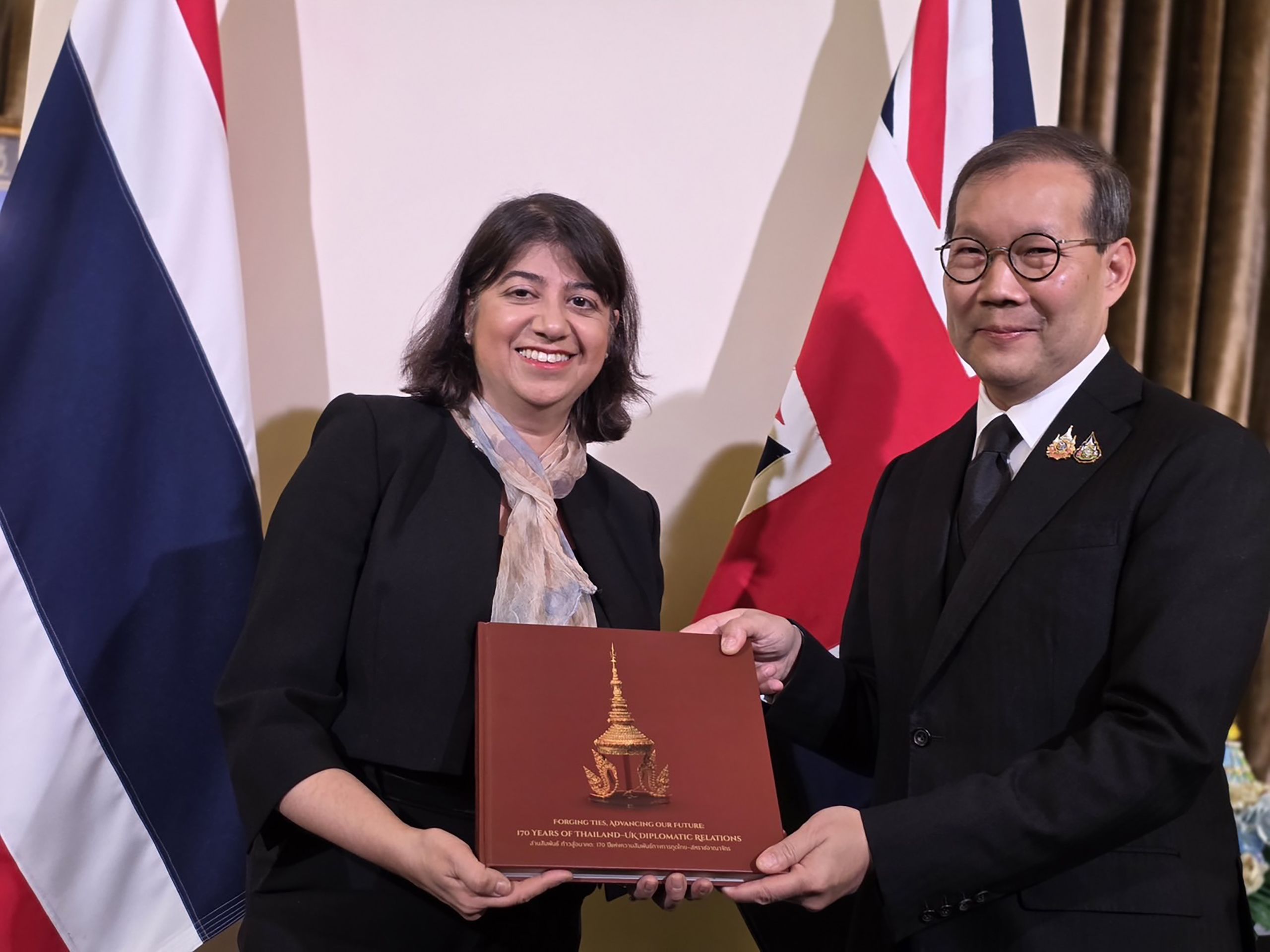
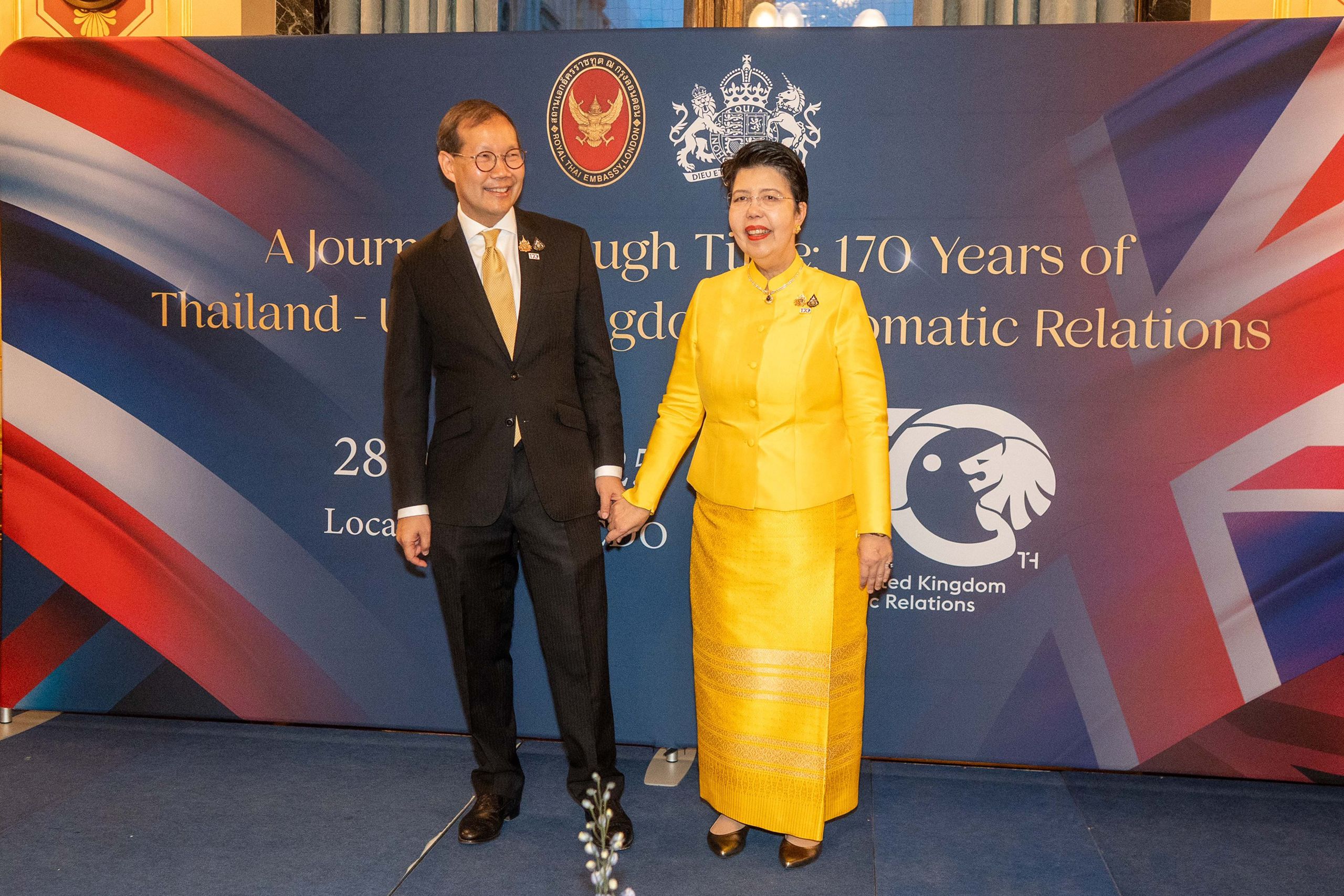
When His Excellency Dr Nadhavathna Krishnamra returned to London earlier this year, he did so at an important moment in Thai–UK relations. His arrival coincided with the 170th anniversary of Thai–UK diplomatic relations and follows milestones in 2024, including the establishment of a strategic partnership and an Enhanced Trade Partnership (ETP).
He sees his task as ensuring that “strategies and related work plans are translated into concrete actions,” particularly in trade, investment, education, training, and cultural exchange. Strengthening high-level engagement, he adds, will be “key to further strengthening our relationship.”
Arriving in the British capital on 31 January and beginning his official duties on 3 February 2025, he says his impressions have been “extremely positive.” London, he observes, is “both vibrant and cosmopolitan,” a city whose ongoing construction and renewal “reflect the resilience and dynamism of the UK economy, even amidst varying economic statistics.”
With one of the world’s largest diplomatic communities, a broad network of government and private-sector partners, and a substantial Thai community in the UK, he notes that “there is much for me to do.”
A Career Shaped by Global Curiosity
Although Dr Krishnamra’s career appears perfectly aligned with the world of diplomacy, he explains that his path was not predetermined. “I have always been deeply interested in history and international affairs,” he recalls. Yet his education across Thailand, the UK, Switzerland and elsewhere left him “eager to apply the knowledge and training I had gained from my studies to share with others back home.”
European Lessons for a New Posting
Having previously served as Thailand’s Ambassador to Germany, Dr Krishnamra brings to London insights shaped by Europe’s interconnected political landscape. While the UK “often thinks of itself as an island,” a perspective “clearly reflected in Brexit,” he says his experience in Europe highlighted “how Europe is interconnected through shared interests, peoples, and political frameworks.”
He notes that “the European project remains important despite current challenges,” and reflects that “both the EU and the UK have missed opportunities in the wake of Brexit.” Coalition-building and collaborative diplomacy—central to his work in Germany—are approaches he intends to continue applying in the UK.
Multilateralism in an Era of Fragmentation
Dr Krishnamra’s previous roles at the Department of International Organisations and in Geneva have reinforced his – and Thailand’s – long-standing belief in the importance of a rules-based order. As he explains, Thailand is not small in terms of geography, population, or its role as “the second biggest” economy in Southeast Asia. But to safeguard its interests, “we need additional multipliers which mean that we have always recognised the importance of a rules-based international system.”
Amid current geopolitical tensions, he acknowledges that multilateralism is challenged by “growing divisions and unilateral tendencies.” Yet he stresses that many states continue to rely on the UN and other platforms to coordinate global action on “climate change and humanitarian crises.” In his view, countries will require “nimble footwork” to uphold principles while “maximising opportunities for cooperation across divides.”
A Post-Brexit Window of Opportunity
For the Ambassador, the current moment presents significant opportunities to expand economic cooperation. “The UK is keen to promote its growth and prosperity and is actively seeking partners across the globe,” he says, noting that Thailand has long been a trusted economic counterpart.
He highlights emerging prospects in the digital economy, advanced electronics, and the energy transition, especially in “green technologies and sustainable energy,” alongside efforts to “upskill and reskill the Thai workforce.” He also points to Thailand’s appetite for new trade agreements, including the potential for a Thailand–UK Free Trade Agreement, calling it “an important window for the UK to act swiftly.”






Soft Power and Cultural Exchange
People-to-people links remain a cornerstone of bilateral relations. Each year, around one million UK tourists visit Thailand, while more than 300,000 Thai tourists travel to the UK. Approximately 10,000 young Thais study in British institutions. These exchanges, Dr Krishnamra notes, generate deep mutual awareness.
Thai cuisine, too, is a powerful cultural ambassador: “the approximately 2,800 Thai restaurants in the UK highlight the popularity of Thai cuisine.” Yet many Britons still travel to Thailand for the “full variety” of their favourite dishes and to experience the country’s natural and cultural attractions.
Looking ahead, he sees creative industries and digital platforms as opportunities to widen cultural access—whether through Thai cinema, television (including LGBTI-inclusive content), cooking masterclasses, or even international productions filmed in Thailand, such as White Lotus, Alien Earth, and Jurassic World.
Thai appreciation for British culture is equally evident—from iconic cars and fashion labels to landscapes like the Cotswolds. For the Ambassador, these exchanges “play a vital role in deepening mutual understanding and fostering enduring connections.”
ASEAN–UK Cooperation: Looking Forward
As a founding member of ASEAN, Thailand sees the regional grouping—soon to comprise 11 members with Timor-Leste’s accession in 2025—as a multiplier for cooperation. The UK, now an ASEAN Dialogue Partner, marks its fifth year in that role next year.
Dr Krishnamra hopes the UK will contribute even more to areas including sustainability and the creative economy. By leveraging shared expertise, he believes ASEAN–UK collaboration can “support sustainable development, enhance people-to-people exchanges, and foster long-term economic and cultural partnerships.”
Thailand’s Diplomatic Challenge
Thailand’s diplomacy has historically been pragmatic, multidirectional, and resilient, successfully navigating colonial crises, two World Wars, and the demands of the modern era. Today, the greatest challenge, he says, is “to maximise our leverage and ensure that we remain visible on the radar of key international partners.”
This involves projecting Thailand’s strengths and enhancing regional influence. He adds that “political certainty and stability at the domestic level” will help Thailand achieve these goals more effectively.
A Career Highlight Shaped by History
For Dr Krishnamra, the most memorable moments of his career occurred during his tenure as Chief of Protocol in Bangkok. He was responsible for arrangements for foreign dignitaries during two landmark royal ceremonies: the 2017 Royal Cremation of His Majesty the Late King Bhumibol Adulyadej The Great, and the 2019 Coronation of His Majesty King Maha Vajiralongkorn Phra Vajiraklaochaoyuhua.
“It was not only an immense honour and responsibility but the experience of a lifetime,” he reflects, noting that ceremonies of this nature had not been organised for around 70 years.
Life Beyond Diplomacy
Outside official meetings, the Ambassador’s passion for history leads him frequently to museums and galleries. Whether in Berlin or London, he values environments “so rich in history, with all their complexities and lessons.” He encourages visitors and colleagues to explore these stories—including, he notes with a smile, learning “the difference between London Bridge and Tower Bridge!”
 Built with Shorthand