
His Excellency
Mr Sven Sakkov
Ambassador of Estonia
to the UK

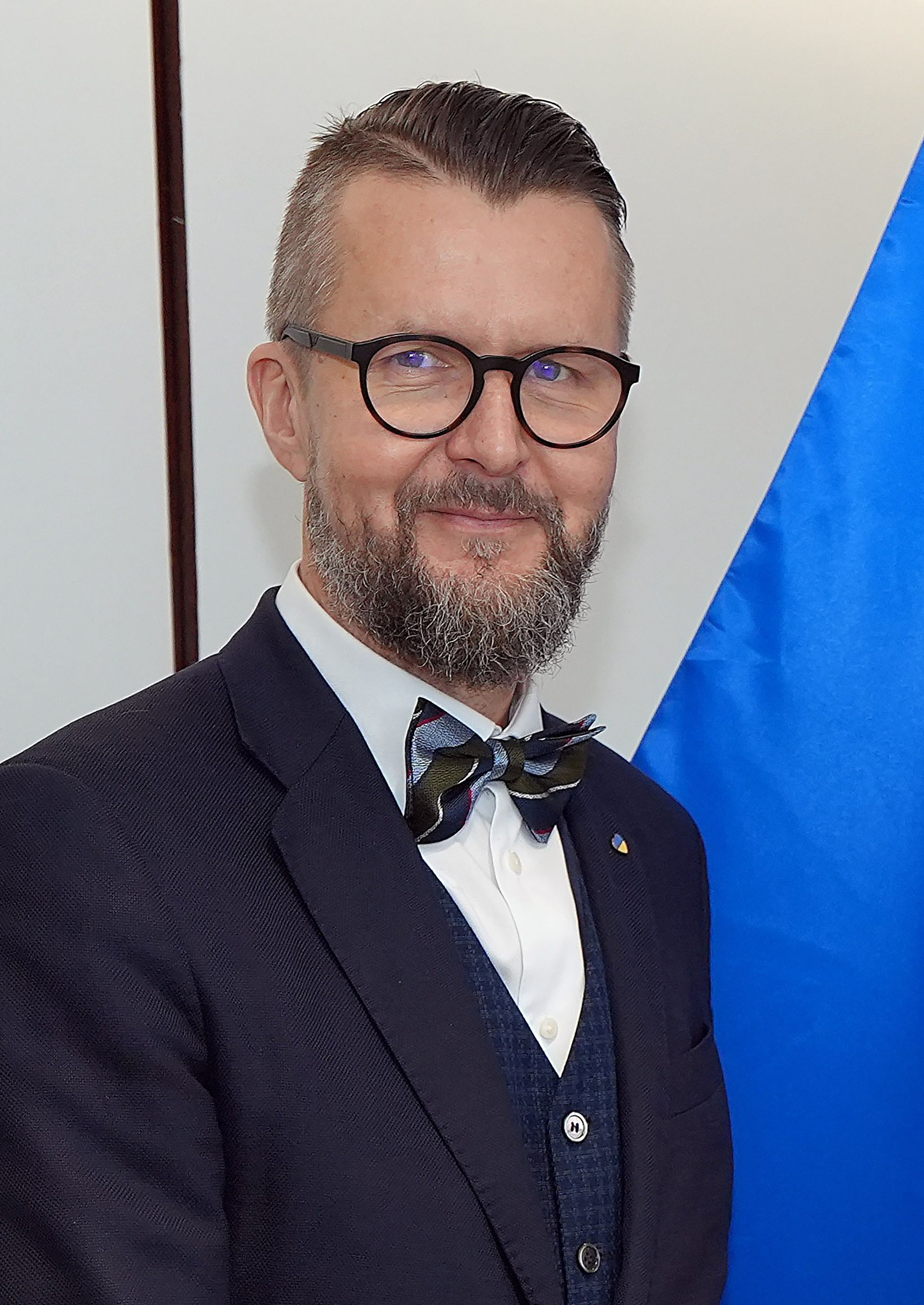
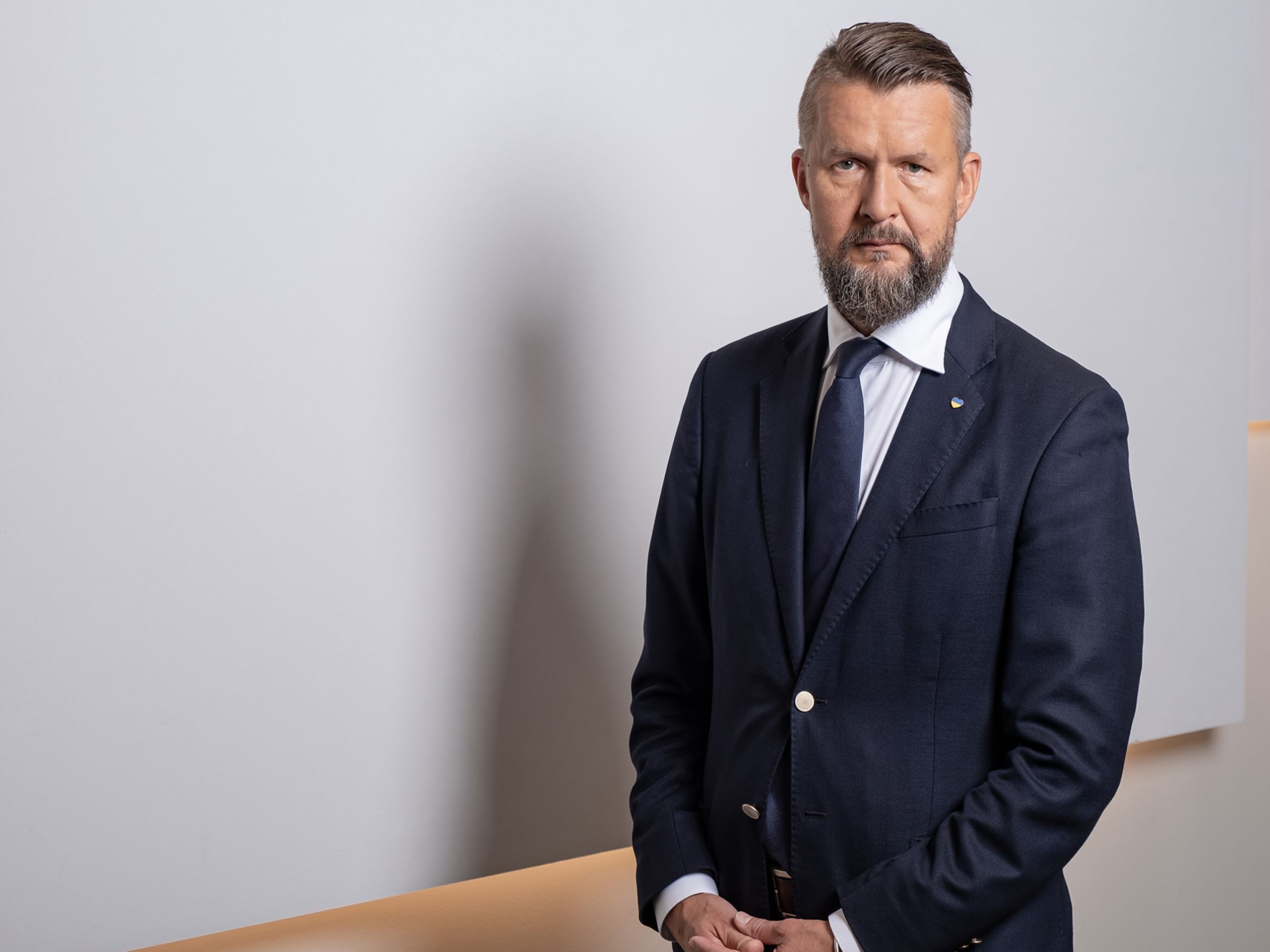
When His Excellency Mr Sven Sakkov, Ambassador of Estonia to the UK, arrived in London with his family last August, it marked a return as much as an arrival. London is familiar terrain: he studied at the Royal College of Defence Studies more than a decade ago and earlier earned an M.Phil. in International Relations at Cambridge University. “But this time, it’s a very different road now I’m representing my country.”
That distinction matters. For a diplomat whose professional life has been shaped by the arc of Europe’s security order—from Cold War occupation and now Russia’s war against Ukraine—London is not simply a posting. It is a strategic hub. “London is a truly global city, but I’m surprised how much time I spend in the car… It’s not so much the distance as the time.”
From a Closed City to an Open World
Ambassador Sakkov grew up in Tartu, Estonia’s second-largest city and intellectual heart, during Soviet occupation. The experience left an enduring imprint.
As a boy, the Ambassador recalls an environment of censorship, professional exclusion, and quiet fear—where dissent rarely led to imprisonment but often resulted in social and economic exile. “The price paid for speaking the truth was usually that people lost their jobs… Essentially, they were ostracised and not able to take part in normal life.”
One of his clearest childhood memories is of his grandfather listening each evening to the Estonian language broadcast of Voice of America, carefully adjusting the radio dial to evade Soviet jamming.
That lived experience of occupation underpins his view of contemporary European security. For Sakkov, the distinction between “Soviet” and “Russian” occupation is semantic rather than substantive. “It’s just another version of the Russian Empire.”
Learning Statecraft from Lennart Meri
Early in his career, Ambassador Sakkov worked for President Lennart Meri, one of the defining figures of Estonia’s post-independence era. His influence was profound. “He was an out of this world character, and probably one of the most consequential Estonian politicians ever.”
Meri’s intellectual range and linguistic agility left a lasting impression, particularly during international engagements. “If he was asked a question in English he answered in English, a question in Finnish he answered in Finnish and so on.”
But it was Meri’s discipline that set the tone. “By 7am he had read all the world news… he was always ahead of us.” For a young official, it was a masterclass in how preparation and historical literacy translate into diplomatic authority.




Nato, the Nordics, and the Baltic Sea
Having served as Estonia’s Ambassador to Finland before taking up his post in London, Sakkov has a front-row view of the strategic transformation brought about by Finland’s and Sweden’s accession to Nato. “This has made a huge impact.”
He points to Finland’s military capabilities and procurement—including advanced aircraft and long-range strike systems—as a decisive addition to allied deterrence. “With Finland and Sweden in Nato, the map of the Baltic Sea is very different from what it was before. Nato’s dominance of the Baltic Sea is much stronger.”
A Century-Long Alliance with the UK
The Ambassador is keen to underline the depth of the Estonian British relationship, which predates Nato by decades. “The UK is Estonia’s oldest ally, dating back to December 1918 when the Royal Navy sailed into the Baltic Sea and played a crucial role in allowing Estonia to beat Bolshevik Russia.”
That historical bond has modern force. The UK has their largest overseas military deployment in Estonia – around 900 British troops – through Operation Cabrit and serves as the framework nation for the Joint Expeditionary Force, a northern European coalition designed for rapid response.
Estonia, for its part, contributes mass as well as resolve. “Within two days of mobilisation, the Estonian Army will be 50,000 strong… and this is not a trivial number.”
Priorities in London: Security, Tech, Culture
Asked about his agenda in London, Ambassador Sakkov is unequivocal. Russia’s war against Ukraine dominates Estonian diplomacy. “This is the most consequential event that has happened in Europe since 1945.” Estonia has a clear three-point approach: “To support Ukraine, to increase the price of aggression to Russia, and to strengthen our own defences.”
Alongside security, business diplomacy is a major focus—particularly Estonia’s technology sector, which boasts the highest number of tech “unicorns” (a startup company valued at over $1 billion) per capita in Europe. London’s financial ecosystem remains a natural partner.
Cultural diplomacy also plays its part. The global celebrations of composer Arvo Pärt’s 90th birthday, including performances at the BBC Proms, offered a reminder of Estonia’s soft power reach.
Milestones and Full Circles
Among the many moments in his career, two stand out. One is collective and geopolitical. “In Spring 2004, I was very proud when Estonia joined Nato. I had been working on Nato issues for most of my career.”
The other is deeply personal: in 1943 his mother was born in Nazi occupied Estonia into a family of war refugees, who had fled from a Finnish speaking region near St Petersburg. “From a historical point of view, her son went back to Finland as Estonian Ambassador in 2020, which was a full circle from her refugee status.”
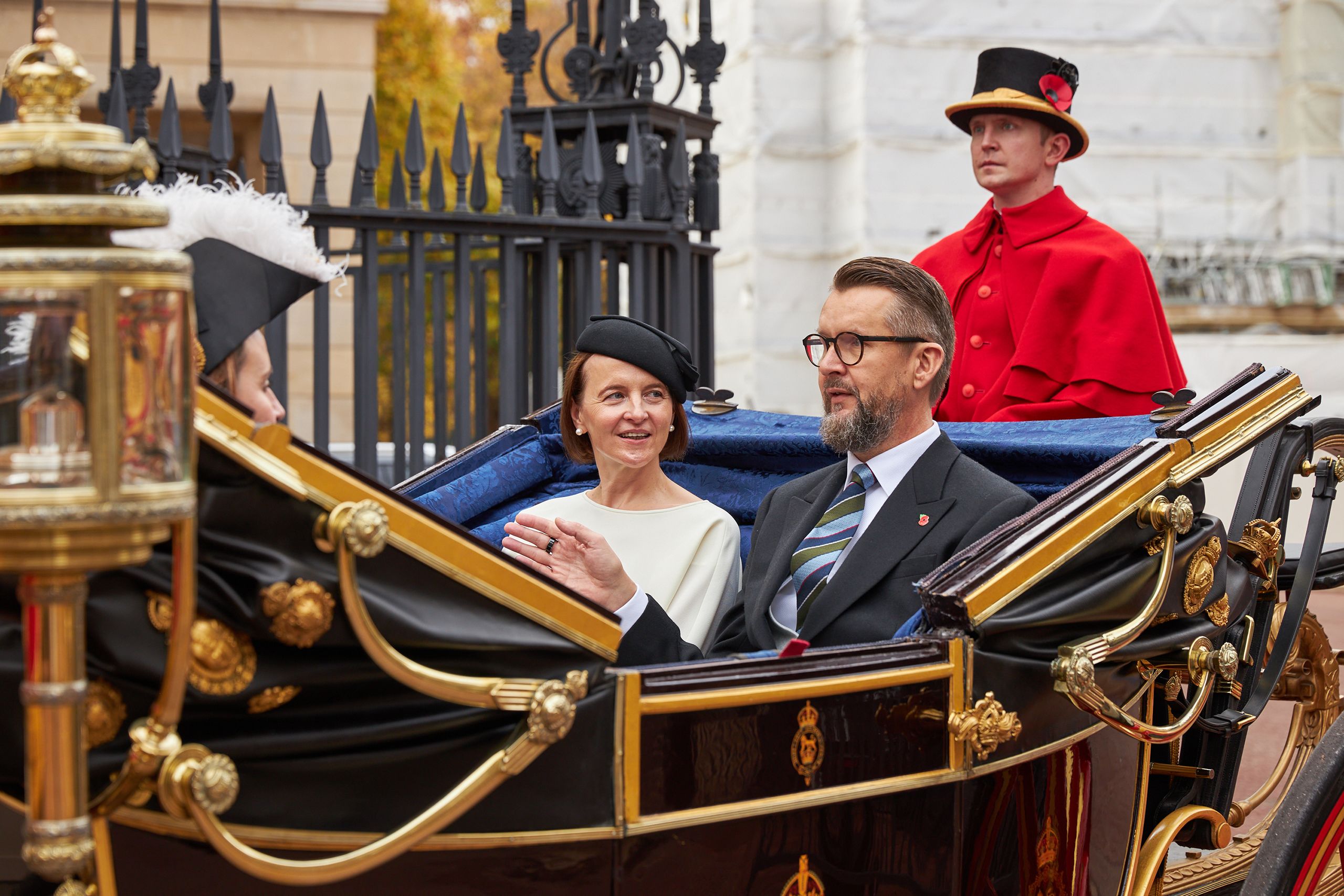
More recently, presenting his Letters of Credence at Buckingham Palace left its own mark. “Taken in a horsedrawn carriage… to meet the King last November, was also a special experience.”
Grounding Strategy in Nature
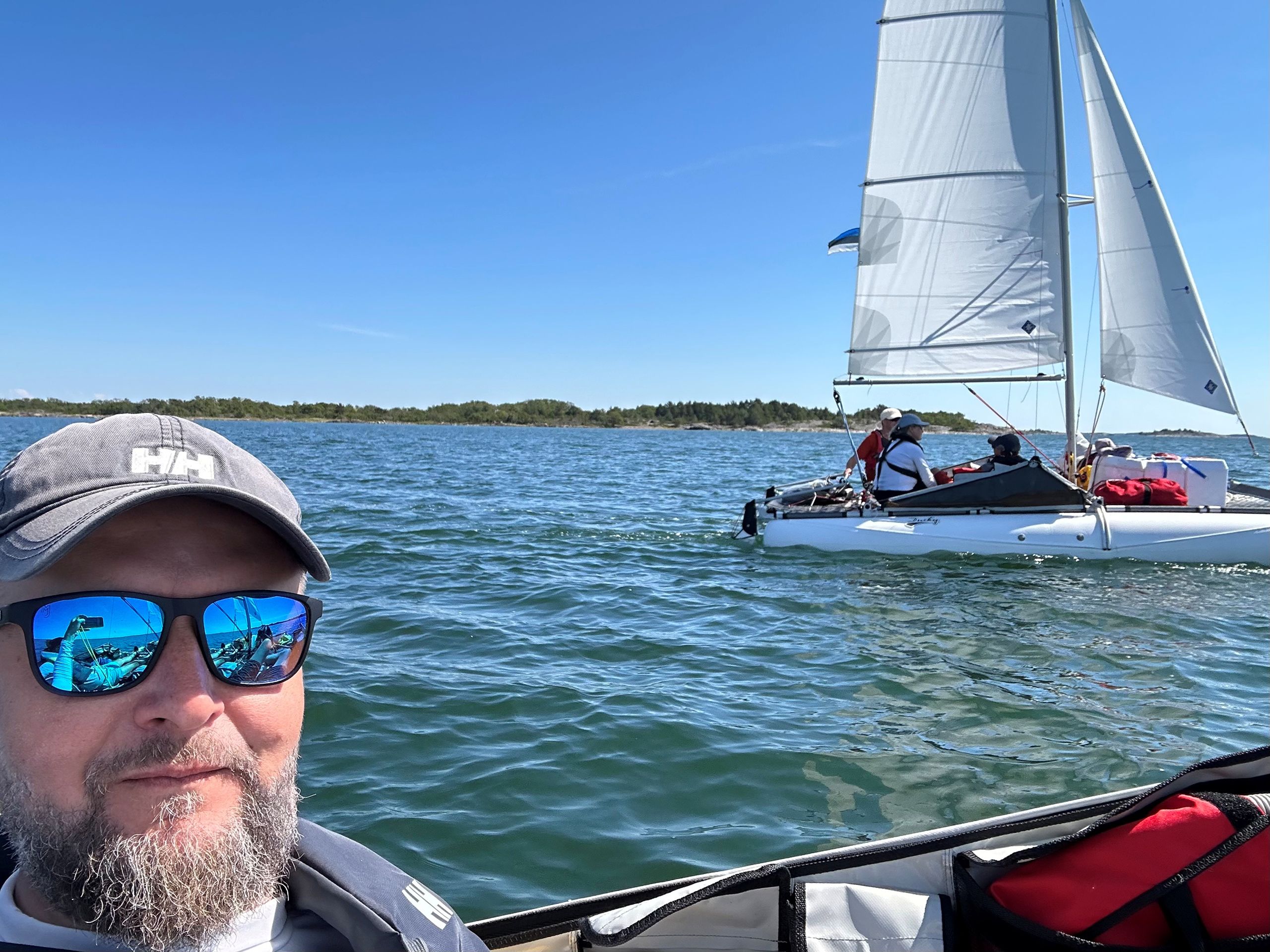
Away from briefing rooms and long car journeys, Ambassador Sakkov finds balance sailing among Finland’s thousands of uninhabited islands with friends each summer. “We are totally dependent on wind. If there’s no wind we can’t go anywhere, and if there’s too much wind, we also can’t go anywhere.”
It is a fitting metaphor for a diplomat shaped by history: acutely aware of forces beyond control, yet skilled in navigating them.
In London, at a moment when Europe’s security architecture is under strain, Estonia’s Ambassador brings not only policy expertise, but memory—of what is lost when sovereignty fails, and of what alliances, patiently built, can preserve.
 Built with Shorthand