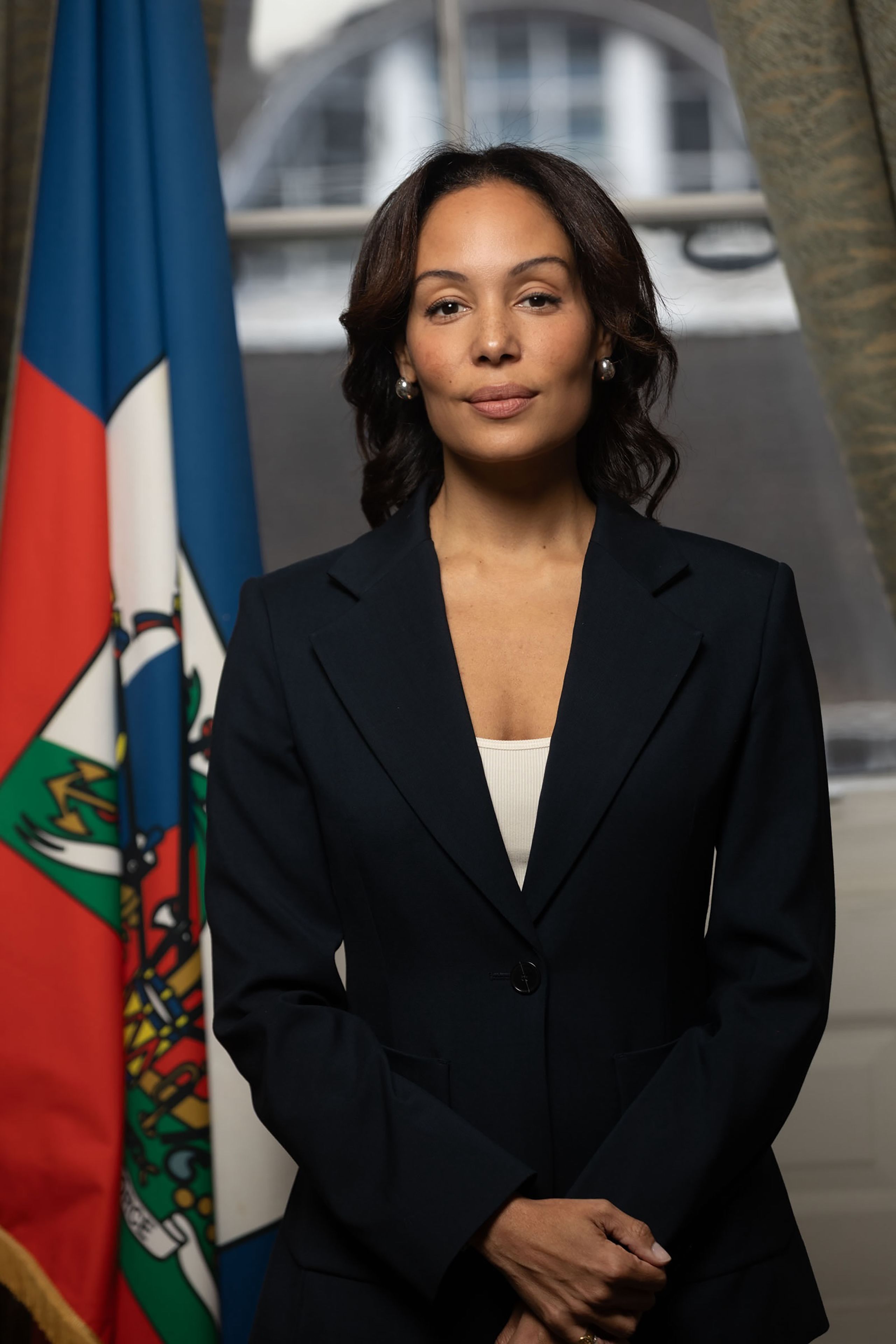
Her Excellency
Anaïse Manuel
Ambassador of Haiti
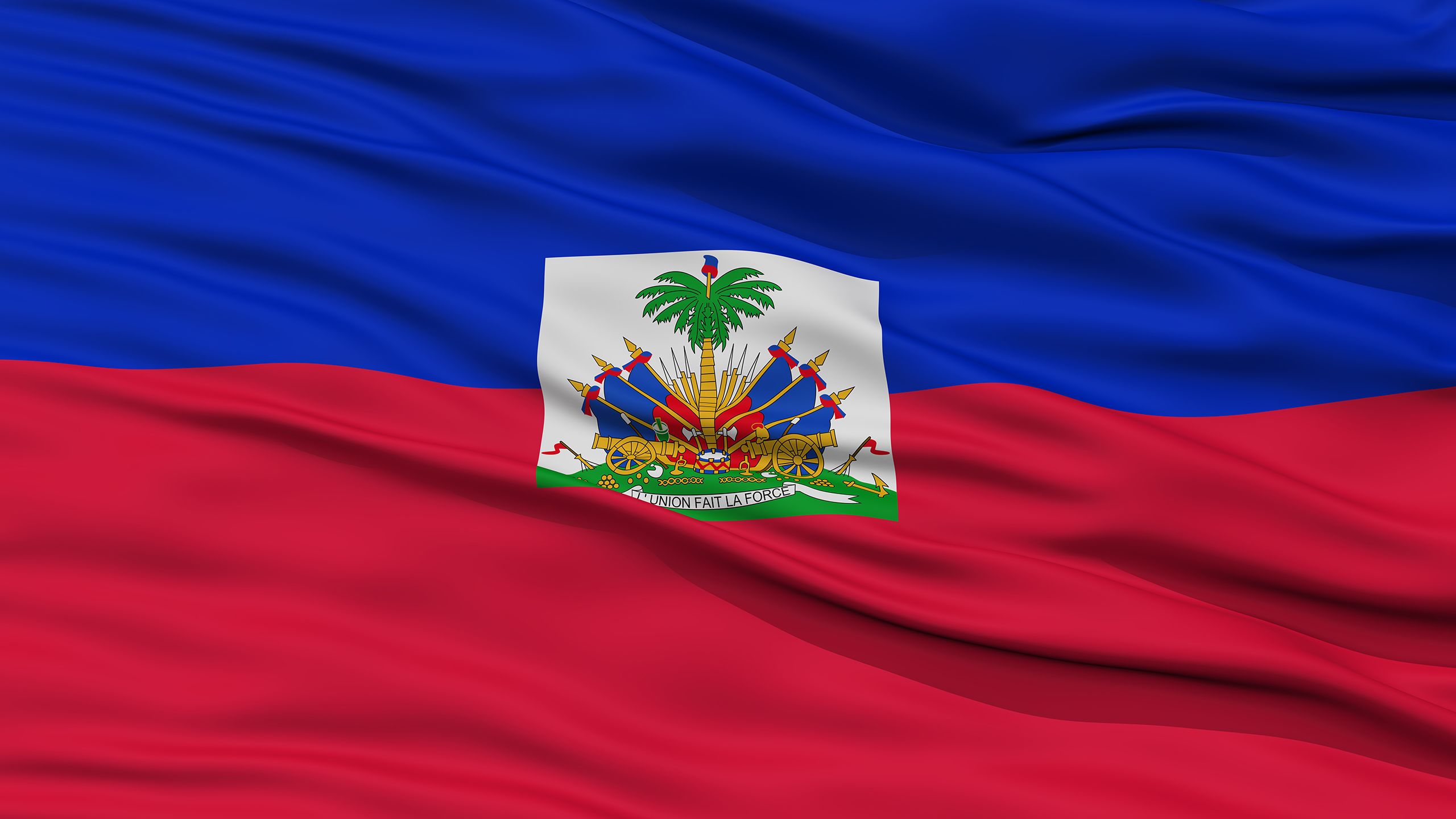

When Ambassador of Haiti Anaïse Manuel arrived in London in July, the city welcomed her with unexpected sunshine—and an immediate sense of belonging. “I immediately fell in love with the city’s vibrant atmosphere and the mix of languages you hear everywhere,” she reflects. “There is an energy here that pulls you in and makes you feel part of something bigger.”
Appointed Ambassador of Haiti to the United Kingdom and Permanent Representative to the International Maritime Organisation (IMO), Ambassador Manuel’s posting brings her to a capital that resonates deeply with both her professional mission and her personal history. Beyond the global character of London, she has been struck by the traces of Haiti woven into the city’s cultural and historical landscape—from the Blue Plaque in Marylebone marking Queen Marie Louise’s former home to the only known copy of Haiti’s Declaration of Independence preserved at the UK National Archives. “It has made my first months in London richer than I ever expected,” she says.
That sense of connection is mirrored in her family life. Watching her daughters flourish in a school community representing more than 70 nationalities has been, in her words, “one of the real joys of our move,” reinforcing her belief in the power of cultural exchange and global citizenship.
A Life Shaped by Public Service and History
Ambassador Manuel’s path to diplomacy was deeply influenced by her upbringing. “I grew up in a family deeply involved in Haiti’s public life, people who believed in service and showed it through their work,” she explains. Her father served as Haiti’s Ambassador to Mexico and Brazil, while her mother worked at the Haitian Embassy in Washington, DC, before moving into a multilateral organisation.
Her childhood was also shaped by moments of political upheaval. Following the 1991 coup d’état in Haiti, she, her mother, and her sister sought refuge in the Brazilian Embassy before eventually relocating to the United States. “Even as a child, those experiences stayed with me and taught me what diplomacy can mean in very real terms,” she recalls.
Although much of her professional career unfolded in the private sector—most notably in Strategy and Transactions at Ernst and Young—she sees her current role as a natural continuation of a long-standing calling. “Stepping into this role feels like coming home to something that has always been part of me,” she says. “In many ways, the path was set long before I fully understood it.”
From Boardrooms to Diplomacy
Ambassador Manuel credits her years at Ernst and Young with shaping her analytical and strategic approach. “Working in strategy and M&A taught me to step back, see the whole picture, understand how the pieces fit together, and bring the kind of due diligence that helps you make decisions with clarity,” she notes.
Equally formative were her experiences leading entrepreneur support programmes and mentoring students in Florida. “Being part of people’s journeys, watching ideas take shape, and seeing individuals grow taught me how important it is to support others in a way that is practical and genuine,” she says. These lessons now inform her diplomatic work. “I think strategically, but the human side is never lost.”
Haiti’s Economic Potential and Investment Vision
In discussing Haiti’s investment landscape, Ambassador Manuel is careful to balance realism with optimism. She points first to the country’s enduring strengths: “Haiti’s greatest strengths have always been the beauty of its land and the depth of its culture.” From world-renowned art and music to craftsmanship, cuisine, and literature, Haiti’s cultural capital remains a powerful asset.
She also highlights agriculture as a sector of long-standing and renewed promise. Coffee, cacao, vetiver, award-winning rum, and tropical fruits all continue to hold significant potential, supported by what she describes as “a young, multilingual, and dynamic workforce ready for opportunity.”
As security conditions improve, Haiti’s geographic position — “at the heart of the Caribbean and next to the largest consumer market in the world” — becomes increasingly strategic. Trade instruments such as the UK’s Developing Countries Trading Scheme (DCTS), which provides quota-free and duty-free access for most Haitian goods, further enhance this outlook.
Beyond agriculture, Ambassador Manuel identifies fisheries, industrial transformation, tourism, infrastructure, and energy as promising sectors. She also addresses mineral resources with caution, emphasising that any development “must be guided by modern and robust regulations that protect our national interests, safeguard our communities, and ensure that development is sustainable.”
“A key part of my role,” she adds, “is ensuring that the global investment community understands both the unique assets Haiti brings forward and the standards we expect for responsible and mutually beneficial investment.”
Advancing Haiti’s Interests in London and Beyond
As Ambassador to the UK and Permanent Representative to the IMO, Ambassador Manuel’s strategic priorities are clear. “Haiti’s priorities are to restore security, reestablish constitutional order and create conditions for free and fair elections,” she states, underscoring that none of these objectives can be achieved in isolation.
Her work here also includes strengthening security cooperation and highlighting Haiti’s importance to regional stability. She points to a recent record drug seizure in Haitian waters as evidence of trafficking networks that threaten not only Haiti but also neighbouring Commonwealth countries and British Overseas Territories.
At the IMO, Haiti is positioning itself as a responsible maritime state. “Our recent accession to the IMSO Convention is an important step in modernising our maritime safety and emergency communication systems and improving our capacity to counter trafficking routes,” she explains.
Across all platforms, she emphasises a consistent message: “Haiti seeks security, democracy and development, and we greatly value the partners who are helping us advance that agenda.”

Renewing Haiti–UK Relations
Ambassador Manuel describes Haiti–UK relations as a partnership with untapped potential. “For too long, the bilateral relationship was quieter than it should have been,” she observes, noting the UK’s role as both a permanent member of the UN Security Council and a close regional neighbour through the Turks and Caicos Islands.
Today, she sees renewed momentum, particularly in security cooperation, education, trade, and culture. Haiti’s history as the first free Black nation, she argues, “shaped the course of world history, and its story deserves to be better known in the UK,” including through academic and cultural partnerships.
“Our art, music, literature, gastronomy and craftsmanship remain some of our most powerful tools of soft power,” she says, adding that initiatives such as Chevening scholarships and the DCTS are creating tangible opportunities for Haitian students and entrepreneurs.
The Voice of Small States in a Multilateral World
In an era of global uncertainty, Ambassador Manuel is clear about the role of smaller states. “Multilateralism matters more than ever,” she says. As an active participant in the UN system, the OAS, CARICOM, the IMO, and other bodies, Haiti’s voice carries equal weight. “We may be a small state, but our voice is equal, and it is through diplomacy that the people of Haiti are heard on the global stage.”
Culture as Diplomacy
Ambassador Manuel is also an Emmy Award–winning producer, recognised for Caribbean Cook Out. The project, she explains, is rooted in the idea that food can open doors to understanding. “Sitting around a table and experiencing a dish together can open a window into a country,” she says. “Food is a universal entry point.”
For Haiti, she sees cultural and gastronomic diplomacy as a powerful way to reshape narratives. “When audiences encounter our history, our creativity, and our everyday life through food and storytelling, they gain a fuller understanding of who we are,” she notes.
Challenges, Milestones, and Balance
Asked about Haiti’s greatest diplomatic challenge, Ambassador Manuel points to sustaining international engagement amid competing global crises. “Ensuring that Haiti remains on the global agenda…is one of the most demanding parts of our work,” she says.
Her own career milestones range from winning an Emmy to serving on the board of the Haitian Ladies Network. Being nominated as Haiti’s Ambassador to the United Kingdom and presenting her Letters of Credence to His Majesty King Charles III, however, stands as a special moment. “Standing in Buckingham Palace on behalf of Haiti brought together every step that led me here,” she reflects.
Outside formal engagements, she finds balance in walking London’s streets, exploring its diverse culinary scene, and travelling with her family. “I walk everywhere now,” she says. “It makes me slow down, look around, and take in a city that has so much to discover on every corner.”
Through diplomacy, culture, and personal connection, Ambassador Anaïse Manuel is shaping a renewed and outward-looking chapter in Haiti’s engagement with the United Kingdom and the wider world.
 Built with Shorthand